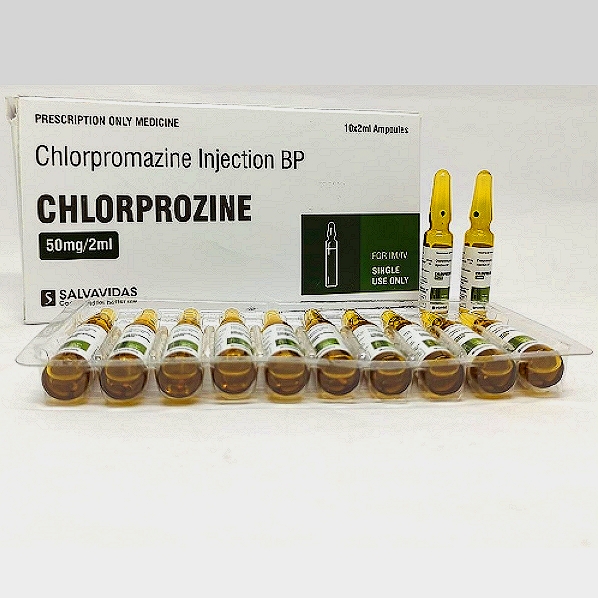
SALVAVIDAS Chlorpromazine is indicated as an antiemetic agent for small animals, and less commonly as a sedative or preanesthetic.
INDICATIONS
- Antiemetic (Anti-vomiting): This is the most common use in small animals like dogs and cats, particularly to manage severe nausea and vomiting caused by toxins, drugs (including chemotherapy), or gastrointestinal disease.
- Sedation and Tranquilization: It is used as a calming agent for fearful or aggressive animals and for general sedation. In large animals, it has been used as a sedative in cattle, swine, sheep, and goats.
- Preanesthetic Agent/Muscle Relaxant: It may be administered before surgery to reduce apprehension, relax muscles, and allow for a lower dose of general anesthesia.
ADMINISTRATION
Intramuscular (IM)
- Technique: The injection is given deep into a large muscle mass, such as the upper, outer quadrant of the buttock (caudal thigh muscle in animals) or the muscles along the spine.
- Important Note: The solution is irritant, so injections should be given deeply, and the injection sites should be rotated for repeated doses to avoid local injury. No dilution is necessary for IM administration unless local irritation occurs, in which case it may be diluted with 0.9% Sodium Chloride Injection or 2% procaine.
Intravenous (IV)
- Dilution is Mandatory: Undiluted chlorpromazine should never be injected directly into a vein. It must be diluted with 0.9% sodium chloride for injection to an approximate final concentration of 1 mg/mL (e.g., 50 mg diluted with 50 mL of saline).
- Slow Infusion: The diluted solution should be infused slowly to minimize hypotensive effects.
- Monitoring and Positioning: Blood pressure should be monitored during and after administration, and the patient must be kept in a recumbent position (lying down) for at least 30 minutes following the injection.