USD
  • Dollar (USD)
  • Euro (EUR)

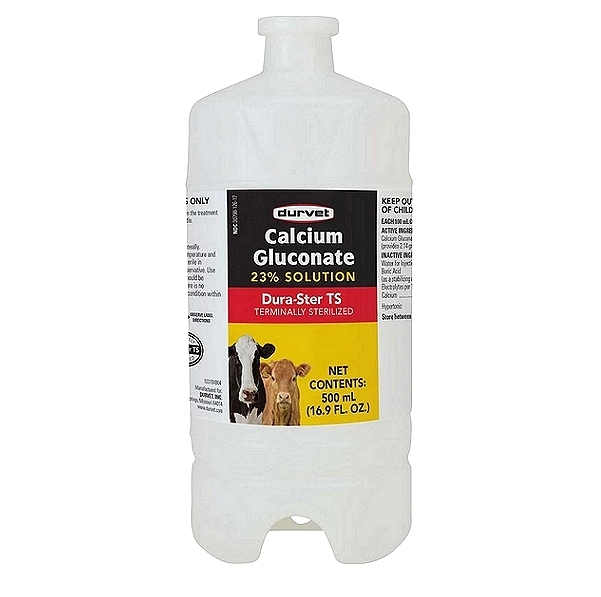
Calcium Gluconate

Home/C/Calcium Gluconate

Calcium Gluconate

In Stock

Calcium Gluconate Solution

Calcium Gluconate Solution is used to treat hypocalcemic conditions in cattle, which can be caused by Eclampsia (Milk Fever), Hypoparathyroidism, Acute Pancreatitis or Renal Failure. It is administered by injection, typically intravenously or intraperitoneally. A WVA Veterinary Medicine.

Calcium Gluconate solution is indicated for the treatment and prevention of diseases caused by hypocalcemia (low blood calcium levels).

INDICATIONS

  • Primary Indication: Treatment of uncomplicated milk fever in adult cattle caused by calcium deficiency.
  • Administration Routes: It can be administered intravenously (IV) or intraperitoneally (IP). Injections should be handled under strict aseptic conditions to maintain sterility.
  • Dosage for Cattle: The usual dosage is 250 to 500 mL.
  • Important Precautions: Monitor the animal’s condition carefully.
    • The solution should be warmed to body temperature before use and administered slowly.
    • This product contains no preservative; therefore, the entire contents should be used when first opened, and any unused portion must be discarded.
    • Do not use the solution if it appears cloudy or contains any precipitate.
    • The dosage may be repeated at 8 to 12 hour intervals if necessary, or as directed by a veterinarian.
    • Only intended for cattle use according to the manufacturer’s label.

ADMINISTRATION

  • Intravenous (IV) – Preferred for Acute Cases: The solution is injected slowly into a vein, such as the jugular in cattle or a peripheral vein in dogs.
  • Intraperitoneal (IP): Used as an alternative to IV.
  • Subcutaneous (SC): Can be used, but must be divided over several sites to reduce irritation.
  • Oral: Specialized oral calcium gluconate solutions are used as a drench or via stomach tube for cattle.
  • Warm to Body Temperature: The solution must be warmed to roughly the animal’s body temperature before injection to prevent shock.
  • Administer Slowly: Rapid IV injection can cause severe cardiac issues, including arrhythmias or cardiac arrest.
  • Monitor Heart Rate: Heart rate and rhythm should be monitored by auscultation or ECG during administration.
No shipping rates are available for this product.
Your Cart
0

Your cart is empty.

Return to Shop
Added to cart