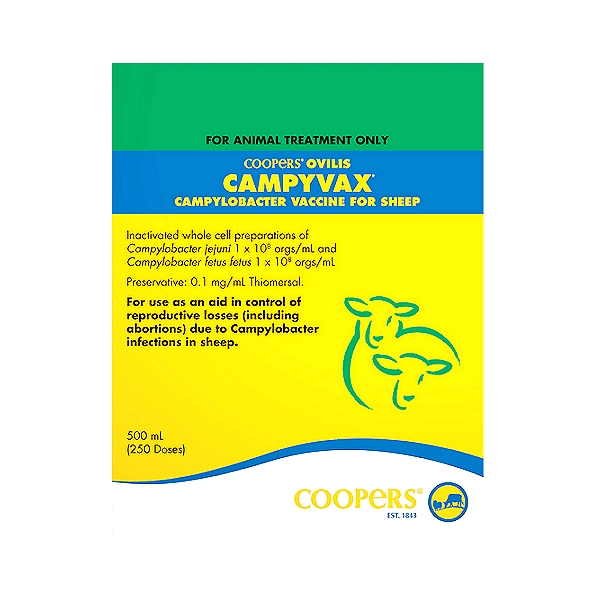
Campylobacter is endemic to all sheep producing areas, and is known to cause abortion in sheep. When used over successive seasons on maiden ewes, incremental lamb losses and cyclical abortion outbreaks can be minimised through vaccination. A WVA Veterinary Medicine.
Campylobacter vaccine is indicated for use in cattle and sheep to prevent reproductive diseases caused by Campylobacter fetus and C. jejuni.
INDICATIONS
Prevention of Infertility: The main clinical sign of the disease in a herd is an increased number of services per conception, leading to low pregnancy rates and a prolonged calving season.
Prevention of Abortion and Embryonic Death: Vaccination helps prevent early embryonic death and occasional abortions that can occur at 4 to 6 months of gestation.
Prophylaxis and Treatment of Infected Animals: The vaccine is used for both prevention in healthy stock and to aid in hastening the elimination of the bacterium in already infected cows, significantly improving their fertility.
Use in Carrier Bulls: Bulls do not show symptoms but carry and transmit the disease. Vaccination is indicated for bulls as both a treatment and preventative measure to stop the spread, often in conjunction with other management practices like artificial insemination.
Herd Management: Vaccination is a key tool in the control and prevention strategy for affected herds, often used in conjunction with identifying and culling carrier bulls or using artificial insemination.
ADMINISTRATION
Route: Subcutaneous (SC) injection, under the skin.
Location (Cattle): Upper neck.
Location (Sheep/Livestock): In the fold of skin behind the shoulder (axillary space).
Technique: Aseptically, using clean, sterilized needles; lift a fold of skin to create a “tent” and inject into the space.
Dosage: Varies by product (e.g., 2 mL for cattle, 5 mL for sheep/goats).
Vaccination Schedule
Flexible vaccination program – 1st dose: Up to 8 weeks prior to joining; 2nd dose: 3 – 8 weeks after first dose. Annual booster before joining for previously vaccinated ewes.
Cattle: A primary 2 mL dose given 30 days to 7 months before breeding, with annual revaccination before breeding.
Sheep: A primary dose before joining, repeated 3-8 weeks later, with annual boosters before subsequent joining.