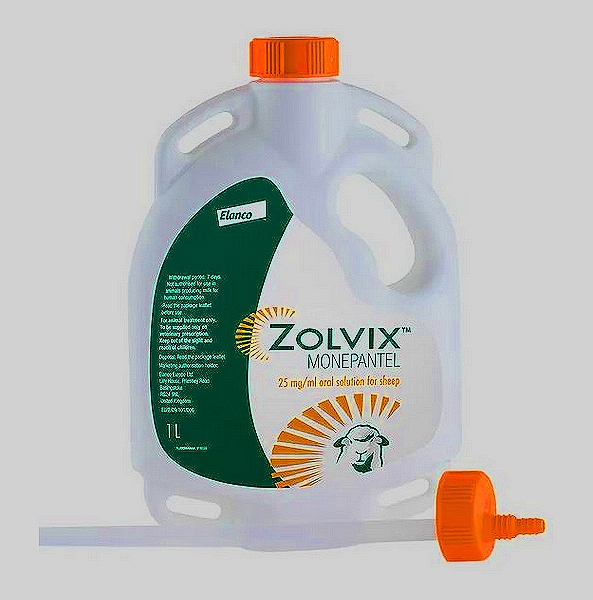
Monepantel is a broad-spectrum anthelmintic indicated for the control of gastrointestinal nematode infections in sheep and cattle.
INDICATIONS
Controls both the fourth larval (L4) stages, and adults, of the following gastrointestinal parasites:
- Haemonchus contortus (barber’s pole worm)
- Teladorsagia (Ostertagia) circumcincta (small brown stomach worm)
- Teladorsagia trifurcata
- Teladorsagia davtiani
- Trichostrongylus axei (stomach hair worm)
- Trichostrongylus colubriformis (black scour worm)
- Trichostrongylus vitrinus
- Cooperia curticei (small intestinal worm)
- Cooperia oncophora
- Nematodirus battus (thread worm)
- Nematodirus filicollis
- Nematodirus spathiger
- Chabertia ovina (large mouthed bowel worm)
- Oesophagostomum venulosum (large bowel worm)
ADMINISTRATION
- Route: The solution is given orally, specifically on the back of the tongue, to ensure the animal swallows the full, low-volume dose. Drenching equipment should be thoroughly cleaned after use.
- Target Species: It is a broad-spectrum anthelmintic for sheep and cattle and is effective against a wide range of gastrointestinal nematodes, including those resistant to other classes of wormers.
- Dosage: The typical dose is 2.5 mg of monepantel per kg of body weight for sheep (1 mL per 10 kg body weight) and a minimum of 2.5 mg/kg for cattle (up to 3.75 mg/kg).
- Dosing Accuracy: Accurate body weight determination is crucial to avoid underdosing, which can lead to resistance development. If treating a group of animals, they should be grouped by weight and dosed for the heaviest animal in the group.
- Treatment Frequency: It is generally administered as a single treatment. The need for and frequency of repeat treatments – typically with a minimum re-treatment interval of 21 days.
- Quarantine Use: Often used as a “quarantine dose” for incoming livestock to prevent the introduction of resistant parasites to a farm.