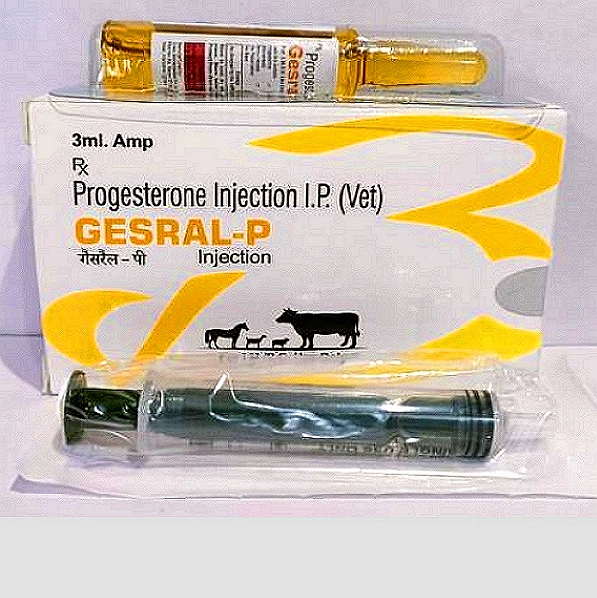
Progesterone is used to control the estrous cycle, and treat behavioral or medical conditions in dogs, cats and horses.
INDICATIONS
- Pregnancy Maintenance: Used to prevent early embryonic loss or habitual abortion in animals with luteal deficiency (hypoluteoidism).
- Estrus Synchronization: Used to regulate, postpone, or suppress heat cycles to coordinate breeding programs.
- Hormonal Imbalance: Management of reproductive disorders such as persistent ovarian follicles or follicular cysts.
- Horses (Mares):
- Pregnancy Support: Often given for the first 100 days of pregnancy if the mare cannot produce enough natural progesterone.
- Behavior Modification: Management of “moody mare” behaviors associated with the estrus cycle.
- Estrus Control: Suppression of outward signs of heat.
- Dogs and Cats:
- Reproductive Control: Temporary postponement or suppression of estrus.
- Behavioral Issues: Off-label use to treat sexually driven behaviors like male-male aggression, roaming, and spraying (cats).
- Hypoluteoidism: Supplementation in pregnant bitches if serum progesterone levels drop below 5 ng/ml before day 58 of gestation.
- Livestock (Cattle/Sheep):
- Timed AI Programs: Used alongside other hormones to synchronize ovulation for artificial insemination.
- Fertility Improvement: Treatment of “repeat breeders” and improving oocyte quality.
ADMINISTRATION
- Preparation:
- Wash and dry your hands thoroughly and work on a clean surface.
- Gather supplies, including the progesterone vial, appropriate needles (one for drawing, one for injection), syringes, and alcohol swabs.
- Wipe the top of the multi-dose vial with an alcohol swab before each use.
- If the progesterone is in oil, warming the vial prior to injection can help thin the thick solution, making it easier and less uncomfortable to inject.
- Drawing the Medication:
- Attach a large gauge needle (e.g., 18-gauge) to the syringe and draw slightly more than the prescribed amount of medication.
- Remove any air bubbles and adjust the plunger to the exact dose prescribed.
- Remove the drawing needle and attach the appropriate smaller gauge needle for injection.
- Injection:
- Select the injection site. Common sites for IM injections in large animals (e.g., horses, cattle) include the neck or hindquarters. For smaller animals or SC injections, areas around the shoulders or shoulder blades may be used.
- Clean the injection area with an alcohol swab and allow it to dry.
- Insert the needle quickly and completely into the muscle (for IM) or under the pinched skin (for SC).
- Aspirate: Pull back on the plunger slightly. If blood appears in the syringe, remove the needle and try a new location.
- If no blood appears, slowly and steadily push the plunger to inject all the medication.
- Post-Injection Care:
- After removing the needle, a warm compress and gentle massage of the site for a few minutes can aid absorption and reduce soreness or knot formation.