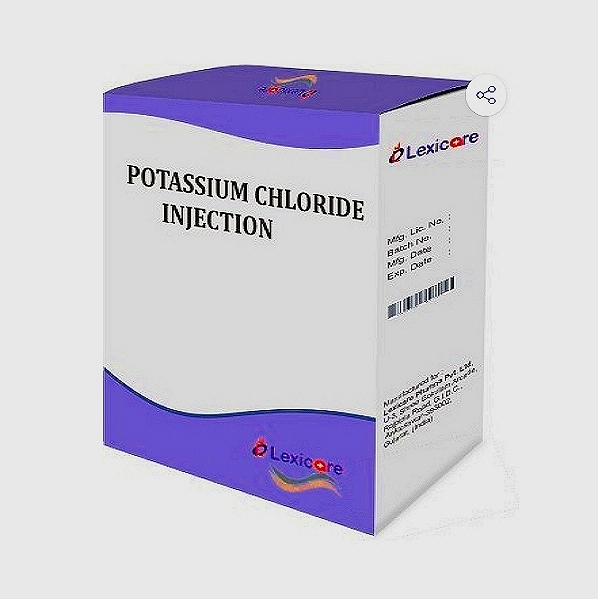
Lexicare Pharma’s Potassium Chloride is indicated for the prevention of potassium deficiency states (hypokalemia) in animals.
INDICATIONS
- Hypokalemia Treatment: Restoring potassium levels depleted by various clinical conditions.
- Electrolyte Replenishment: Correcting electrolyte imbalances caused by excessive loss or inadequate intake.
- Parenteral Nutrition Support: Used as an additive in maintenance intravenous fluid therapy to meet daily requirements.
- Digoxin Toxicity: Cautiously used to manage arrhythmias precipitated by potassium loss in patients taking digoxin.
ADMINISTRATION
- Administration: The injection concentrate must be diluted with other intravenous (IV) fluids before administration. It is typically given as a slow, continuous IV infusion, and the rate should not exceed 0.5 mEq/kg/hour in most cases to prevent serious cardiac issues.
- Monitoring: The animal’s potassium levels must be closely monitored, often with serial blood tests, to ensure safe and effective treatment.
- Conditions: It is used in critically ill patients, sometimes in conjunction with magnesium supplementation, to correct severe imbalances and support recovery.
Euthanasia
In a different context, a high, concentrated dose of potassium chloride administered intravenously or intracardially is a recognized method of euthanasia for animals that are already in a deep, surgical plane of general anesthesia. The high potassium concentration rapidly suppresses myocardial electrical conduction, leading to cardiac arrest.
- Requirement: This method is only acceptable in unconscious animals because administering high doses to a conscious or merely sedated animal is considered inhumane and causes pain, muscle movements, and distress.