USD
  • Dollar (USD)
  • Euro (EUR)

Vitamin E

Home/V/Vitamin E

Vitamin E

In Stock

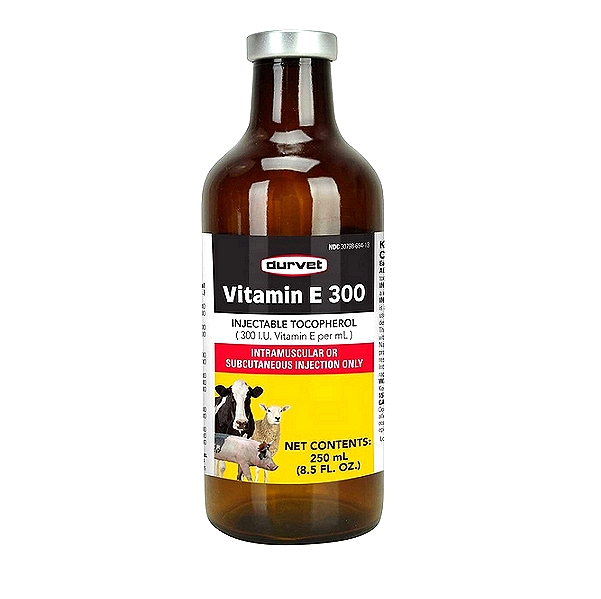
Vitamin E Injection

Vitamin E injection is indicated for the prevention and treatment of diseases caused by Vitamin E and Selenium deficiencies. Treats arthritis in dogs, pansteatitis in cats, and liver & white muscle diseases in pigs. Supports immune function and reproductive health in animals. 

Vitamin E injection is indicated for the prevention and treatment of diseases caused by Vitamin E and Selenium deficiencies in animals.

INDICATIONS

  • Treating White Muscle Disease (Myodegeneration): For Selenium-Tocopherol Deficiency syndrome, in calves, lambs, and ewes.
  • Supporting Muscle and Nerve Function: Vitamin E is a crucial antioxidant that maintains normal neuromuscular function. 
  • Enhancing Immune Function: Vitamin E plays a significant role in modulating immune responses.
  • Improving Reproductive Health: Supplementation can enhance reproductive performance in breeding animals. 
  • Addressing Dietary Deficiencies: The vitamin E content in stored feeds like hay or ensiled forage diminishes over time. 
  • Treating Specific Conditions in Pets: May be used to treat conditions like pansteatitis, certain liver diseases, and cognitive dysfunction. 

ADMINISTRATION

  • Administration Route: The product label will specify the approved routes, most commonly IM or SQ. For horses, slow IV or deep IM administration may be options depending on the specific product (e.g., E-SE).
  • Divided Doses: If the total dose volume is large (e.g., greater than 5 mL), it should be divided equally and injected into two or more separate sites to minimize local muscle soreness and tissue reaction.
  • Injection Sites:
    • Intramuscular (IM): Injections are given deeply into large muscle masses such as the gluteal or cervical.
    • Subcutaneous (SQ): Injections are given just under the skin in an area with extra skin, such as over the shoulder or neck area.
  • Technique: Proper sterile technique is essential. After inserting the needle into the muscle or under the skin, the plunger should be pulled back slightly (aspirated) to ensure no blood enters the syringe.
  • Adverse Reactions: Anaphylactoid (severe allergic) reactions, some of which have been fatal, have been reported in animals after these injections, especially in horses. Animals should be monitored closely after administration. 
No shipping rates are available for this product.
Your Cart
0

Your cart is empty.

Return to Shop
Added to cart