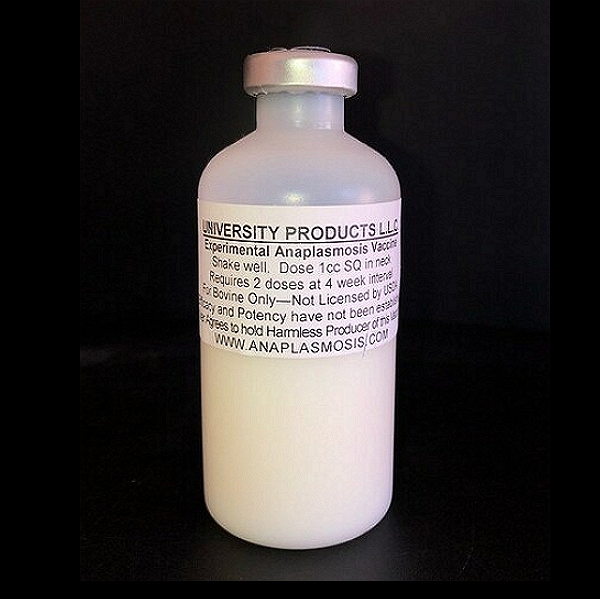
University Products Anaplasmosis vaccine, invented at the AgCenter Department of Veterinary Science, affects only bovine strains of the disease, which can cause anemia, weight loss and death in cattle. A WVA Veterinary Medicine.
University Products Anaplasmosis vaccine is indicated for Bovine Anaplasmosis, especially in high-risk areas.
INDICATIONS
Protection in Endemic Areas: Used in cattle regions where Anaplasmosis is common, transmitted by ticks and insects.
Disease Prevention: Protects against the severe clinical signs of Anaplasmosis, including fever, anemia, and weight loss.
Cost-Effectiveness: A more sustainable and budget-friendly option compared to continuous use of antibiotic feed additives.
Reduced Antibiotic Resistance: Helps mitigate the overuse of antibiotics, which can lead to resistance.
Ease of Use: Simpler administration (two doses then annual boosters) compared to managing feed additives.
ADMINISTRATION
Initial Vaccination: Two 1 cc doses are administered subcutaneously (SQ) in the neck. The doses are given three to four weeks apart.
Timing: The second dose should ideally be administered at least two weeks before the start of the vector season (when ticks and flies are active) to ensure immunity has time to develop.
Booster Shots: An annual booster shot is required to maintain protection.
Handling: A sterile needle must be used for each animal to prevent the mechanical transmission of anaplasmosis or other diseases via blood contamination.
Pregnancy and Calves: The vaccine is reported to be safe for use in all stages of pregnancy. However, there is a risk of neonatal isoerythrolysis (NI), or “yellow calf” syndrome, in calves born to vaccinated cows if the calf inherits a foreign blood type from the sire.
Concurrent Treatment: During an outbreak or the initial vaccination period, a veterinarian may also prescribe a simultaneous injection of oxytetracycline to provide temporary protection until the vaccine’s immunity is established.