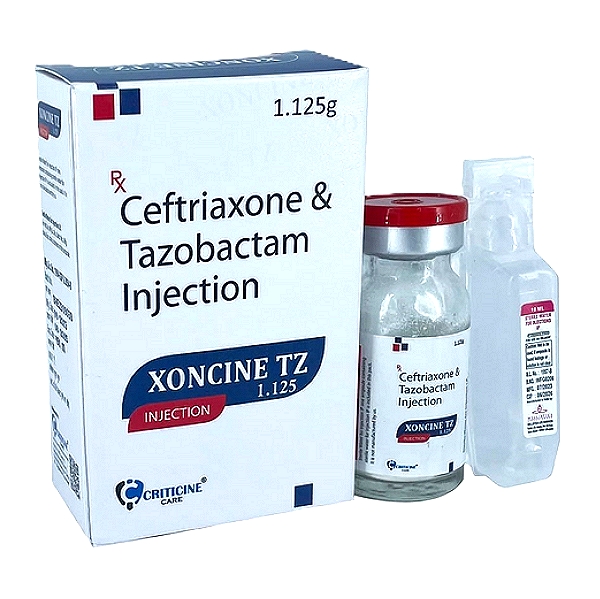
Ceftriaxone & Tazobactam is a potent, broad-spectrum combination antibiotic used in veterinary medicine to treat severe, systemic, or beta-lactamase-resistant bacterial infections in both companion animals and livestock.
INDICATIONS
1. Reproductive and Mammary Infections
- Acute Mastitis: Highly utilized in dairy livestock (such as cattle and buffaloes) for severe mammary gland infections, including coliform mastitis.
- Uterine Infections: Used to treat metritis, endometritis, and pyometra in both companion animals and livestock.
2. Severe Systemic and Tissue Infections
- Bacterial Septicemia: Indicated for life-threatening bloodstream infections and septic shock.
- Meningitis: Successfully crosses the blood-brain barrier to treat central nervous system infections.
- Bone and Joint Infections: Prescribed for conditions like osteoarthritis, osteomyelitis, and septic arthritis.
3. Respiratory Tract Infections
- Pneumonia & Bronchopneumonia: Treats severe lower respiratory tract infections in livestock (e.g., shipping fever components) and companion animals.
- Upper Respiratory Tract Infections: Used for severe bronchitis, sinusitis, or rhinitis when secondary bacterial resistance is suspected.
4. Urinary and Abdominal Infections
- Urogenital Tract Infections: Indicated for complicated cystitis and nephritis (kidney inflammation).
- Intra-abdominal Infections: Used to manage peritonitis and complex deep-tissue abdominal infections.
5. Dermatological and Surgical Care
- Skin and Soft Tissue Infections: Treats deep pyoderma, abscesses, cellulitis, and severe wounds.
- Surgical Prophylaxis: Administered pre- and post-operatively to prevent perioperative infections during high-risk orthopedic or soft-tissue surgerie.
ADMINISTRATION
1. Intravenous (IV) Administration
- Direct IV Injection: The reconstituted solution can be given slowly directly into the vein, sometimes taking a few minutes to complete.
- IV Infusion: For larger animals (like cattle or horses), the medication may be diluted in a larger volume of intravenous fluids and administered over a period of time.
2. Intramuscular (IM) Administration
- Deep Muscle Injection: The solution is injected deep into a large muscle mass.
- Site Rotation: For higher dosages, the volume may be divided and injected into more than one site to prevent muscle soreness or tissue irritation.