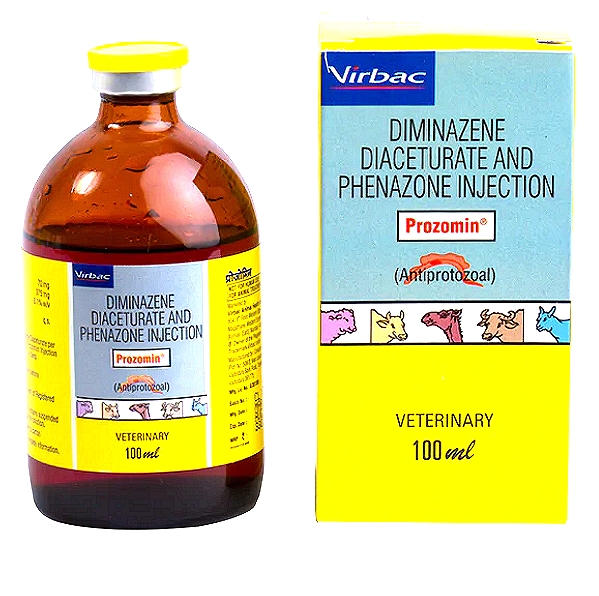
Diminazene Aceturate is indicated for the treatment and prophylaxis of trypanosomiasis, babesiosis, and sometimes theileriosis in livestock and dogs.
INDICATIONS
- Trypanosomiasis: This debilitating and often fatal disease is caused by various Trypanosoma species, such as T. congolense, T. vivax, T. brucei, and T. evansi, in cattle, sheep, goats, horses, and dogs.
- Babesiosis (Piroplasmosis): The injection is effective against protozoa of the genus Babesia (e.g., B. bovis, B. bigemina, B. ovis, B. canis) in various animals.
- Theileriosis: It is used for the treatment of certain types of theileriosis, particularly those caused by Theileria annulata.
- Mixed Haemoprotozoan Infections: It is indicated for treating infections involving multiple blood protozoa concurrently.
- Anaplasmosis: Some product indications mention its use for anaplasmosis in animals.
- Pyrexia of Unknown Origin: The injection, which often includes the anti-inflammatory phenazone, can also be indicated for fevers where the cause is unknown.
ADMINISTRATION
- Primary Route: Deep intramuscular injection is the most common and recommended method for most animals, including cattle, sheep, goats, horses, and dogs.
- Alternative Routes:
- Intravenously: This route has been studied, but the intramuscular route is generally preferred for its better-tolerated pharmacokinetics in most cases.
- Subcutaneously: This is an option for cattle with some specific formulations.
- Injection Site: When large volumes are administered, it is advisable to divide the dose across multiple injection sites to minimize local pain and tissue irritation.
- Dosage Preparation: The drug often comes as a powder in sachets and must be reconstituted with sterile water for injection to a specific concentration before use.
- Dosage: The dosage varies by animal species, weight, and the type of infection being treated. A common therapeutic dose is around 3.5 mg per kg of body weight, but this can be doubled for certain resistant infections.