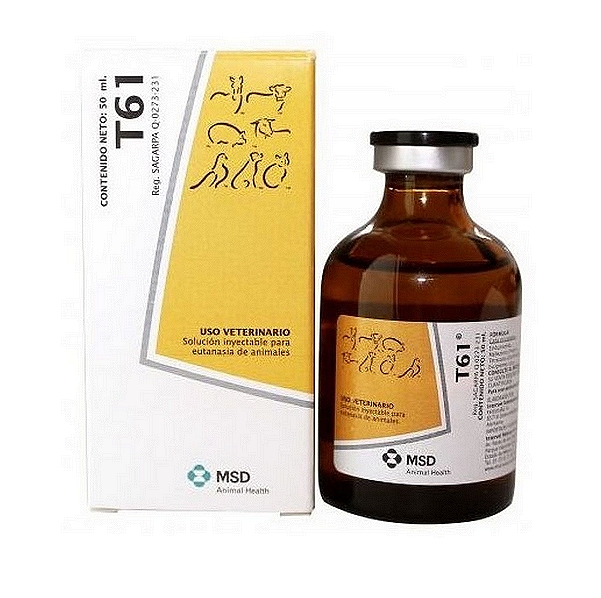
T-61 is indicated for the humane euthanasia of animals. It is a non-narcotic injectable solution used to induce death in various species.
INDICATIONS
- Species: Licensed for use in dogs, cats, horses, ruminants (cattle/sheep), laboratory animals, fur-bearing animals, and ornamental birds.
- Requirement for Unconsciousness: A primary indication for its safe and ethical use is that the animal must be unconscious or sedated before administration.
- Method of Action: It causes death through a combination of three active ingredients:
- Embutramide: Produces strong narcosis and paralyzes the respiratory center.
- Mebezonium Iodide: Induces a curariform paralytic action on skeletal and respiratory muscles, leading to circulatory collapse.
- Tetracaine Hydrochloride: A local anesthetic included to reduce pain at the injection site.
ADMINISTRATION
The crucial requirement for the ethical use of T-61 is ensuring the animal is fully unconscious before the drug takes full effect. If administered to a conscious animal, the muscle paralysis can occur before the loss of consciousness, leading to a possible death by suffocation while the animal is still aware, which is considered inhumane. The recommended administration involves:
- Sedation: The animal must first be sedated or anesthetized with another agent (like isoflurane or xylazine) to ensure a deep plane of unconsciousness.
- Intravenous Injection: The solution is administered intravenously, often via a venous catheter to ensure correct placement and full injection of the dose.
- Dosage: Specific dosages are based on body weight (e.g., 0.3 mL per kg in dogs). Administer at a moderate, steady rate.