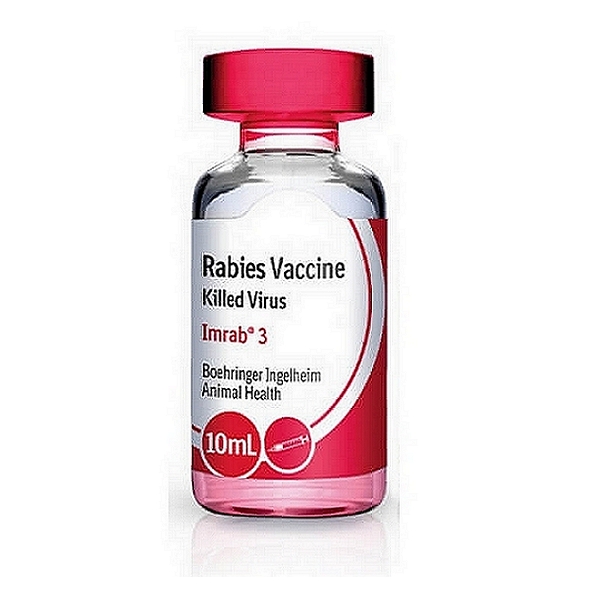
Rabies vaccine is indicated for most mammals, especially dogs, cats, horses, and ferrets, to prevent the fatal zoonotic disease,
INDICATIONS
- Target Species: Indicated for healthy dogs, cats, cattle, sheep, goats, horses, and ferrets.
- Puppies and Kittens: Generally indicated starting at 12 to 16 weeks of age.
- Booster Intervals: A booster is required one year after the initial dose, regardless of the animal’s age or the specific vaccine type used. Subsequent boosters are typically indicated every 1 to 3 years based on local legal requirements and product labels.
- Legal Mandates: In many jurisdictions, rabies vaccination is a legal requirement for dogs (and sometimes cats) over four months of age.
ADMINISTRATION
- Route: Most commonly subcutaneous (under the skin) in the hind leg. Intramuscular (into the muscle) is also an approved route for some vaccines.
- Site Selection: Veterinarians often use different sites for different vaccines (e.g., rabies in the right rear leg, distemper in the right shoulder) to prevent confusion and separate vaccine reactions.
- Technique: A sterile syringe and needle are used. The skin is lifted, the vaccine is injected, and the needle is pulled back slightly to ensure it’s not in a blood vessel before injecting.
- Sterilization: Avoid using chemicals like alcohol or disinfectants on the skin before injection, as they can interfere with vaccine efficacy.
Dosage by Animal
- Cats & Dogs: A 1 mL dose is administered either subcutaneously (under the skin) or intramuscularly (into the muscle).
- Ferrets: A 1 mL dose is administered only subcutaneously.
- Sheep, Cattle & Horses: A 2 mL dose is administered either subcutaneously or intramuscularly.
Reviews
There are no reviews yet.