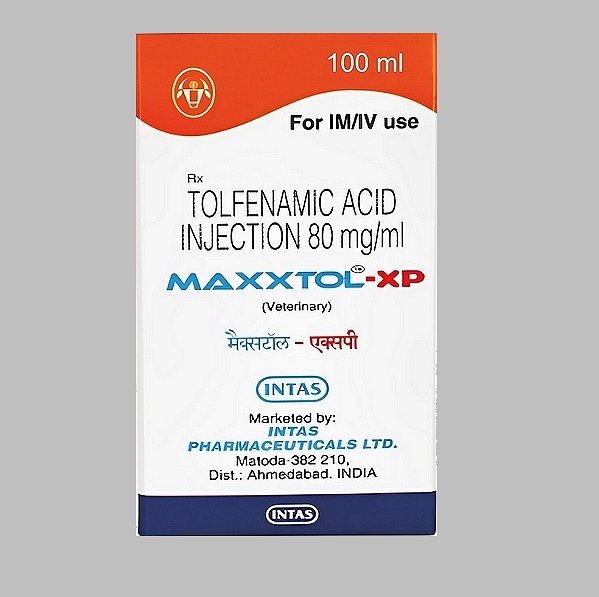
Intas MAXXTOL-XP (tolfenamic acid) is a non-steroidal anti-inflammatory drug (NSAID) used for its anti-inflammatory, analgesic, and antipyretic properties in cattle, pigs, dogs, and cats.
INDICATIONS
- Cattle & Buffalo: Used as an adjunct treatment for bovine respiratory disease (pneumonia) to reduce nasal discharge and improve general condition. It is also indicated for acute mastitis (mammary gland infections) and musculoskeletal disorders such as lameness.
- Pigs: Indicated as a supportive treatment for Metritis Mastitis Agalactia (MMA) syndrome in sows to help restore milk production and reduce fever.
- Dogs: Used for the symptomatic treatment of inflammatory and painful conditions involving the musculoskeletal system (e.g., osteoarthritis) and for post-operative pain management.
ADMINISTRATION
- Dogs: 4 mg/kg bodyweight (equivalent to 1 mL/10 kg) via subcutaneous (SC) or intramuscular (IM) injection. It can be repeated once after 24 hours if required.
- Cats: 4 mg/kg bodyweight (equivalent to 1 mL/10 kg) via subcutaneous (SC) injection only. Do not use the IM route in cats.
- Cattle (Pneumonia/Respiratory): 2 mg/kg bodyweight (equivalent to 1 mL/20 kg) via intramuscular (IM) injection, preferably in the neck area. This may be repeated after 48 hours.
- Cattle (Acute Mastitis): 4 mg/kg bodyweight (equivalent to 1 mL/10 kg) via slow intravenous (IV) injection.
- Pigs: 2 mg/kg bodyweight (equivalent to 1 mL/20 kg) as a single intramuscular (IM) injection in the neck.