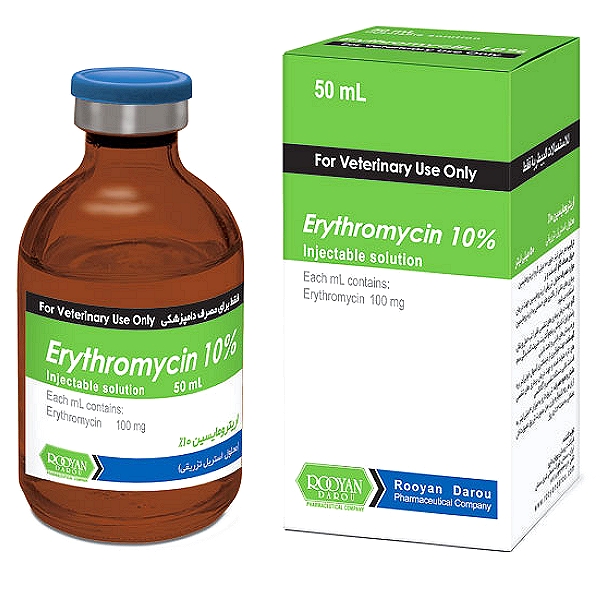
Rooyan Darou Erythromycin 10% is a macrolide antibiotic used in the treatment of infections caused by susceptible Gram-positive bacteria, Mycoplasma, and certain other pathogens.
INDICATIONS
- Bacterial Infections: Erythromycin is a narrow-spectrum macrolide antibiotic effective against specific Gram-positive bacteria and Mycoplasma.
- Respiratory Infections: It is frequently used for pneumonia and other lung or sinus infections. In foals, it is a common treatment for Rhodococcus equi infections, often in combination with rifampin.
- Skin and Wound Infections: It is used to treat skin, bone, and wound infections caused by susceptible organisms.
- Other Infections: Indications can include some tick-borne diseases (like Lyme disease), metritis, foot rot, and specific intestinal infections (like those caused by Campylobacter bacteria).
SPECIES
- Cattle, Calves, Sheep, and Goats: Used for respiratory infections, metritis, and foot rot, typically via deep IM injection. It is also used as a prokinetic in cattle.
- Dogs and Cats: Used for specific bacterial infections. IM administration is labeled for use, but oral forms are more common.
- Horses: Primarily used in foals for Rhodococcus equi infections. It is generally not safe for use in adult horses.
- Small Animals (Guinea pigs, rabbits, hamsters, gerbils): Erythromycin is toxic to these species and can cause fatal diarrhea; its use is contraindicated.
- Fish: It can be used by injection to control mortality from bacterial kidney disease in certain salmonid species.
ADMINISTRATION
- Intramuscular (IM) Injection: This is the typical route for livestock like cattle, sheep, and pigs.
- The injection is given deep into a large muscle, such as the neck or leg muscles.
- A 16 or 18 gauge needle is used.
- The site should be rotated for multiple injections, and no more than 10 mL should be given per site to minimize pain and tissue damage.
- IM administration is known to be painful in some animals and is generally not recommended in dogs and cats.
- Intravenous (IV) Infusion: In some severe cases or for specific indications, erythromycin can be administered intravenously, but it must be given as a slow, continuous or intermittent infusion only.
- IV push is an unacceptable route of administration due to its irritative properties.
- This method is typically performed in a hospital setting under professional veterinary care.
- Intraperitoneal (IP) Injection: For fish, erythromycin may be administered by either IM or IP injection.