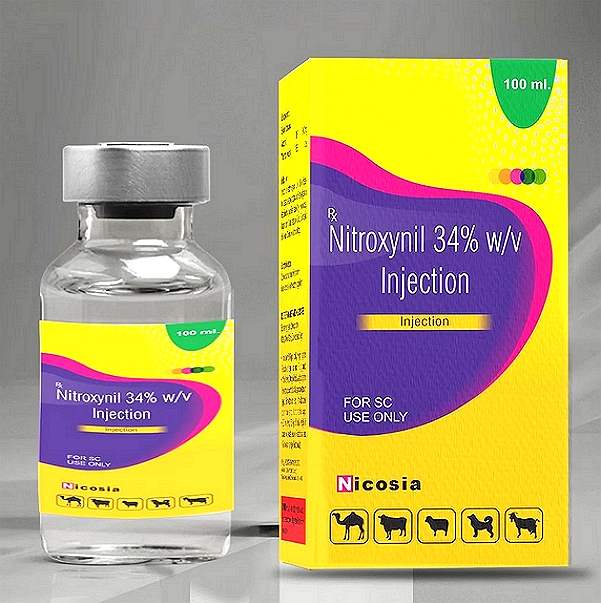
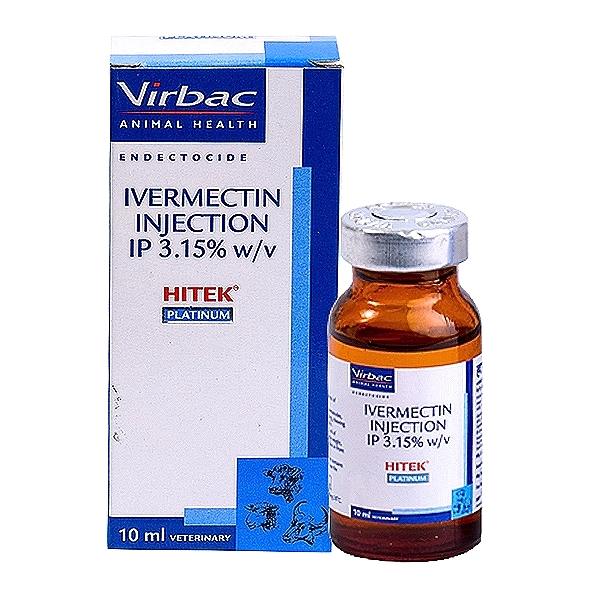
Nicosia Nitroxynil injection is an anthelmintic (flukicide) indicated for use in treating internal parasitic infestations in cattle, sheep, and goats.
INDICATIONS
- Fascioliasis: Treatment of infestations caused by both mature and immature liver flukes (Fasciola hepatica and Fasciola gigantica). It is particularly noted for its efficacy against strains of F. hepatica that have developed resistance to triclabendazole.
- Gastrointestinal Nematodiasis: Effective against several roundworms, including:
- Haemonchus contortus: Adult and larval stages in cattle and sheep (including benzimidazole-resistant strains).
- Haemonchus placei: In cattle.
- Oesophagostomum radiatum: In cattle.
- Bunostomum phlebotomum: Hookworm infestations in cattle.
- Oestrosis: Treatment of nasal bots (Oestrus ovis) in sheep.
- Parafilaria: Used in cattle and camels (often at a double dose for this specific indication).
ADMINISTRATION
- Preparation: Determine the animal’s body weight accurately to avoid toxicity, as Nitroxynil has a narrow safety range.
- Injection Site: Inject under the skin, typically high on the neck behind the ear for cattle or in an area free from wool for sheep.
- Procedure:
- Use a clean, sharp needle and follow aseptic precautions.
- Lift a fold of skin to create a “tent” and insert the needle into the subcutaneous space.
- Aspiration: Pull back slightly on the plunger; if blood appears, you have hit a blood vessel and must choose a new site.
- Inject the solution and gently massage the area to help it disperse.
- Handling Caution: Nitroxynil is an orange-red solution that stains wool, hair, and skin. Wear gloves to prevent staining your hands and ensure no leakage occurs during injection to avoid staining the animal’s fleece.