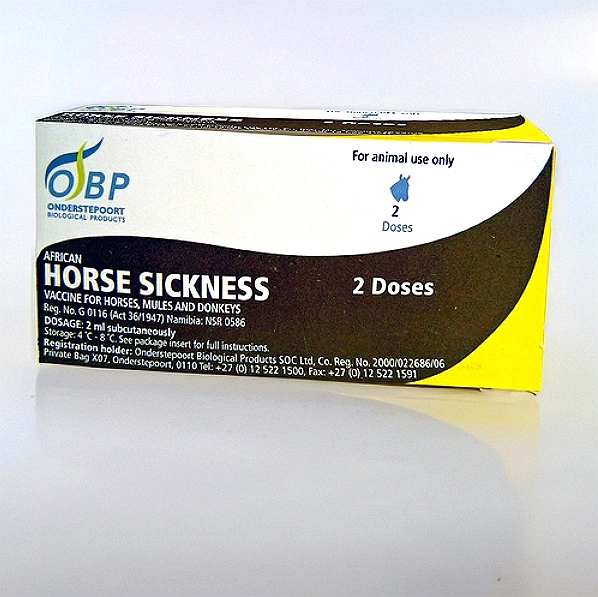
OBP African Horse Sickness Vaccine is a modified live, polyvalent vaccine administered to horses via two separate subcutaneous injections several weeks apart. A WVA Veterinary Medicine.
African Horse Sickness (AHS) vaccine is indicated for horses, donkeys, and mules in endemic areas.
INDICATIONS
Geographic Risk: Horses living in or traveling through AHS-endemic regions are primary candidates for vaccination.
Age & Immunity: Young horses (under 3) or those with fewer than three vaccinations are prioritized due to their higher susceptibility.
Disease Prevention: To protect against the severe, hemorrhagic AHS, which can cause up to 95% mortality, leading to respiratory distress, fluid in lungs (pulmonary edema), and frothy nasal discharge.
The vaccination process involves two components (bottles) that contain different serotypes of the AHS virus:
Vaccine 2 (Tetravalent): Contains serotypes 2, 6, 7, and 8.
ADMINISTRATION
Preparation: The vaccine is supplied as a freeze-dried powder. A sterile diluent is added to the powder and mixed until it is dissolved. The dissolved vaccine is then drawn into a syringe.
Route and Site: The vaccine is administered subcutaneously, under the skin. A common site for subcutaneous injections in horses is the neck region.
Schedule: The vaccination requires two doses.
First Dose: Vaccine 1 is administered.
Second Dose: Vaccine 2 is administered at least three weeks after the first dose, with four weeks being considered ideal.
Annual Booster: The complete two-dose series should be repeated every year to maintain protection.